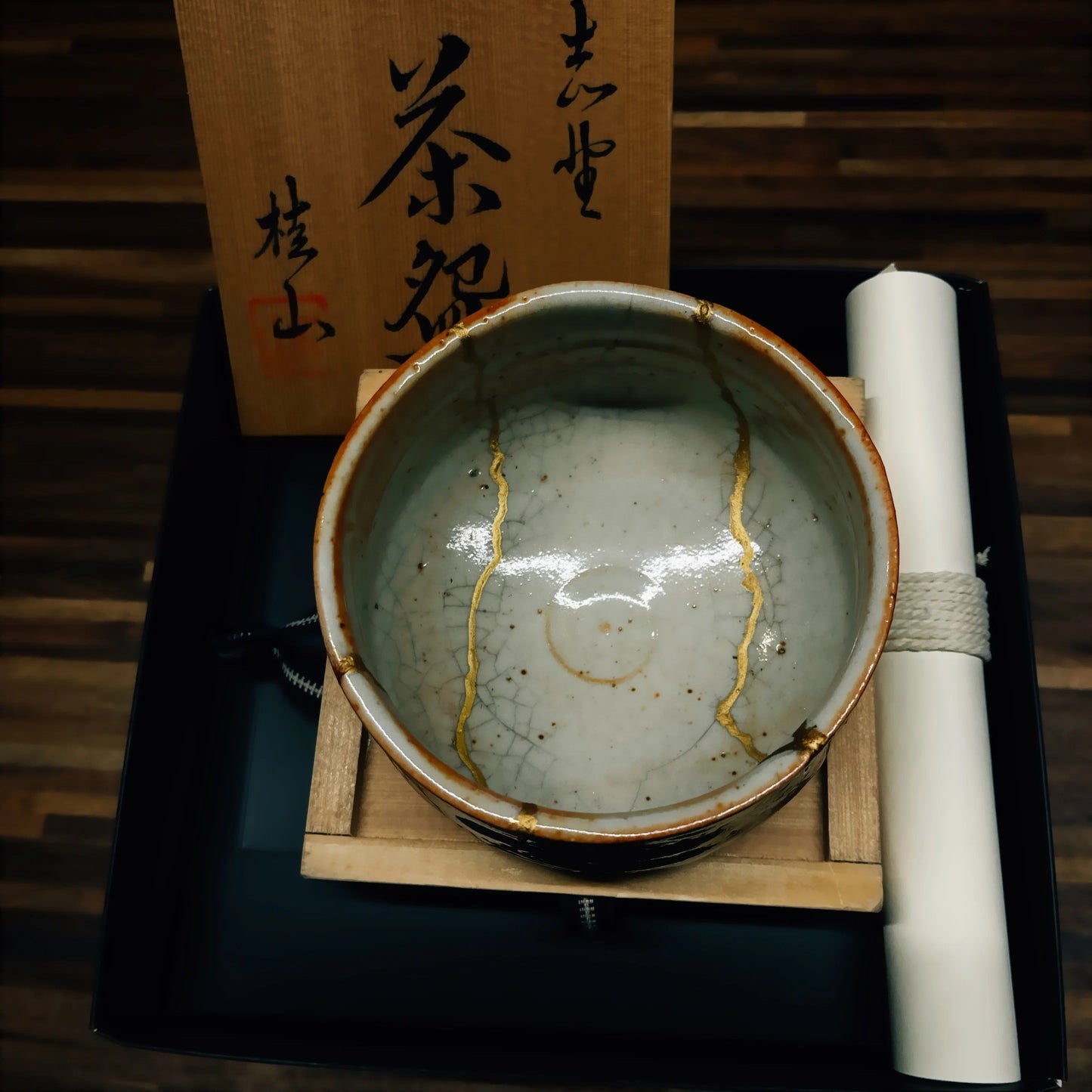
Restored Shino Matcha Chawan Kintsugi – Momoyama 24K Gold
An authentic matcha bowl in the Shino technique from the Momoyama period. The first Japanese white pottery with brushed abstract painting. Handcrafted restoration with Urushi lacquer and pure gold. Tomobako box signed by the potter, guaranteeing exceptional provenance and authenticity.
Low stock
Couldn't load pickup availability
- Paiement sécurisé
- Expédié sous 48 h
This Shino technique Chawan represents the first Japanese white pottery created during the Momoyama period. Molded with traditional Mino Mogusa clay and covered with a characteristic thick white glaze, it features an abstract painting brushed by the potter. Its perfectly balanced weight of 315 grams offers exceptional comfort for whisking matcha.
History Shino Technique – Momoyama Period
The Shino technique represents the first white pottery developed in Japan during the Momoyama period at the end of the 16th century. Produced in the kilns of Mino in Gifu Prefecture, this ceramic is distinguished by its unique thick white glaze. The Shino style also marks the appearance of the first brushed paintings on Japanese ceramics, using iron oxide pigments under the white glaze.
Traditional Mogusa Clay
Mogusa clay is the traditional material used for historic Shino ceramics. This clay comes from the Mino region where layers of clay formed 2 to 5 million years ago at the bottom of a massive ancient lake called Lake Tokai. Components of altered granite and other minerals accumulated and matured, creating a distinctive clay with a rustic character. Mogusa clay gives the ceramic its unique texture that absorbs the thick glaze in a special way.
Wabicha and Momoyama Style
Shino ceramics flourished during the Momoyama period tea ceremony craze. This era saw the emergence of the Wabicha aesthetic developed by Sen no Rikyū, which favored simple forms and natural imperfections. Shino bowls with their irregular milky white glaze perfectly embodied this philosophy. The semi-cylindrical hantsutsu-gata shape became the popular style for Japanese bowls during this period, distinguishing itself from the more symmetrical forms produced in China and Korea.
Aesthetic White Glaze and Abstract Painting
This bowl features the thick white glaze characteristic of Shino ceramics. This milky white glaze completely covers the clay body, creating a soft and warm surface. On one side of the rim, an abstract painting was brushed by the potter using iron oxide pigments before the glaze was applied. This decoration technique represents a major innovation of the Shino school.
Balance and Comfort of Use
The weight of 315 grams offers perfect balance for the matcha ceremony. The bowl is comfortably held with two hands according to Japanese tradition. The dimensions of 11.5 cm diameter and 7.7 cm height correspond to classic proportions allowing the matcha to be whisked with the chasen without constraint. The 550 ml capacity allows for preparing a generous portion while maintaining walls thick enough to insulate heat.
Potter’s Signature
The potter’s signature is inscribed near the foot of the bowl according to tradition. This handwritten signature authenticates the piece and attests to its artisanal origin. The bowl comes with its Tomobako box made of paulownia wood and a traditional protective cloth. This complete presentation guarantees provenance and increases the piece’s heritage value.
Restoration Traditional Kintsugi Pure Gold
This bowl was restored using the traditional technique in our workshop. The method exclusively uses natural Urushi lacquer and 24-carat pure gold powder to reveal the repair lines. This restoration respects the spirit of the piece while celebrating its history through cracks transformed into valued aesthetic elements.
Authentic Urushi Technique
- Natural Lacquer: Urushi resin is extracted from the Toxicodendron vernicifluum tree. Its application requires several weeks of curing in a controlled humidity and temperature environment. Once hardened, it becomes chemically inert.
- 24-Carat Pure Gold: Genuine gold powder never tarnishes and guarantees a permanent archival finish. The gold reveals the repair lines, turning the cracks into unique patterns impossible to replicate.
- Food Safety: Once the lacquer is fully hardened, the bowl regains its ceremonial function without residual toxicity. It can be safely used for preparing matcha.
Kintsugi Philosophy
This restoration embodies the Japanese concept of finding beauty in imperfection and honoring the history of an object. The golden lines do not hide the cracks but celebrate them as an integral part of the piece's existence. This philosophical approach reflects wabi-sabi and transforms the repair into a creative act that enhances the cultural and emotional value of the bowl.
Details Identity Card
Use Matcha Ceremony
Traditional Preparation
This bowl regains its original function for the matcha ceremony after complete restoration. The classic dimensions of 11.5 cm diameter and 7.7 cm height allow whisking matcha with the chasen without constraint. The balanced weight of 315 grams offers a comfortable two-handed grip according to tradition. The 550 ml capacity is suitable for preparing one to two generous servings of matcha koicha or usucha.
Care and Maintenance
- Cleaning: Rinse gently with lukewarm water after use. Use a soft sponge without scrubbing the gold lines or glaze. Avoid harsh detergents that could damage the Urushi lacquer.
- Drying: Dab with a soft cotton cloth. Allow to dry completely before storing. Never use a dishwasher or microwave.
- Storage: Keep in the Tomobako box wrapped in the protective cloth. Store at a stable temperature in a dry place away from direct light and significant humidity fluctuations.
Expertise THÉ-ŌLOGY Restoration
The restoration of this matcha bowl was carried out in our workshop following traditional Japanese protocols. Every step respects methods passed down through generations of artisans specialized in precious repairs. Our commitment to authenticity guarantees the exclusive use of traditional materials and adherence to the natural, non-compressible curing times of Urushi lacquer.
Quality Criteria
- Authentic Materials: Exclusive use of natural Urushi lacquer traditionally extracted and 24-carat pure gold. No synthetic substitutes like epoxy or metallic powders imitating gold are used in our visible restorations.
- Traditional technique: Application of the Urushi-Tsugi method along the break lines. Respect for natural lacquer curing times in a controlled humidity and temperature environment to guarantee final food safety.
- Artisanal excellence: Meticulous handwork with attention to every detail. Careful finishing ensuring archival durability of the restoration while preserving the unique character of the Shino piece.
FAQ Frequently Asked Questions
History What makes Shino ceramics unique?
Shino ceramics represent the first white pottery developed in Japan during the Momoyama period at the end of the 16th century. Produced in Mino kilns, it is distinguished by its unique thick white glaze mainly composed of feldspar and generously applied over traditional Mogusa clay. This glaze creates a milky surface with subtle variations impossible to reproduce with modern techniques. The Shino style also marks the appearance of the first brushed paintings on Japanese ceramics using iron oxide pigments under the glaze. Mino’s Mogusa clay gives the bowl its distinctive rustic texture that uniquely absorbs the glaze, creating the characteristic aesthetic appreciated by tea masters.
Materials What is traditional Mogusa clay?
Mogusa clay is a traditional material from the Mino region historically used for Shino ceramics. This clay formed 2 to 5 million years ago at the bottom of a massive ancient lake called Lake Tokai that covered the Mino area. Altered granite components and other minerals from surrounding areas accumulated and matured at the lake bottom, creating diverse layers of clay. Mogusa clay has a distinctive rustic character with a unique texture that differs from the Kibushi and Gairome clays also used in the region. This clay gives Shino ceramics their characteristic appearance and their unique ability to absorb the thick white glaze. The expertise in blending these clays has developed over 1300 years in the Mino region.
Dimensions Are the dimensions of this bowl suitable for matcha?
The dimensions of 11.5 cm in diameter and 7.7 cm in height perfectly match the traditional proportions of a matcha bowl. This size allows whisking the matcha with the bamboo chasen without the tines constantly touching the sides. The sufficient diameter provides the necessary space for the whisking motion in the shape of an M or W depending on the technique used. The height of 7.7 cm maintains an adequate depth to hold the liquid while allowing the bowl to be comfortably held with both hands. The weight of 315 grams offers an ideal balance between stability and maneuverability. The capacity of 550 ml is suitable for preparing one to two generous servings of thick koicha or light usucha matcha according to personal preferences and the amount of powder used.
Usage Can this restored bowl be used to prepare matcha?
This restored bowl fully regains its function for the matcha ceremony. The Urushi lacquer, completely hardened after several weeks, becomes chemically inert and perfectly safe for food contact. The pure 24-carat gold used for the repair lines is non-toxic and resistant to contact with the hot matcha water. You can prepare your traditional matcha by pouring hot water over the powder and whisking with the bamboo chasen. The balanced weight of 315 grams allows you to hold the bowl comfortably during tasting according to Japanese tradition. After use, simply rinse with warm water and dry by gently patting with a soft cloth to preserve the golden lines and the characteristic white glaze.
Authenticity How to verify the authenticity of this Shino bowl?
The authenticity of this bowl is verified by several elements. The paulownia wood Tomobako box serves as the traditional Japanese certificate of authenticity with the potter's handwritten signature near the foot of the bowl. The characteristic thick white glaze with its subtle variations reflects the traditional technique using feldspar generously applied over Mogusa clay. The abstract painting brushed with iron oxide pigments under the glaze represents a distinctive feature of authentic Shino ceramics. The dimensions and weight correspond to the classic proportions of the Momoyama period. The typical semi-cylindrical hantsutsu-gata shape of this era stands out from the perfectly symmetrical forms produced in China or Korea. The rustic texture of the clay visible under the glaze confirms the use of traditional Mino materials.
Value Why invest in a restored Kintsugi matcha bowl?
An authentic Shino matcha bowl with restoration represents a unique heritage and functional investment. Momoyama-style Shino ceramics embody the history of the Japanese tea ceremony with their pioneering white glaze and innovative brushed paintings. Restoration transforms cracks into golden lines, creating a unique piece impossible to replicate where each pattern tells a different story. The pure gold lines never tarnish, ensuring permanent archival value. The presence of the signed Tomobako and protective cloth significantly increases the collectible value. This bowl serves as a decorative art object, an authentic ceremonial tool for daily matcha preparation, and an educational support illustrating Japanese wabi-sabi aesthetics. Included insurance protects your investment during transport and the first years of ownership.
Maintenance How to maintain a restored Shino Kintsugi bowl?
Maintaining a restored bowl requires simple and delicate actions. After each use for matcha, rinse immediately with lukewarm water to prevent the powder from drying on the porous glaze. Use a soft sponge without scrubbing vigorously on the gold lines or the white surface. Absolutely avoid harsh detergents, hard brushes, and abrasive sponges that could damage the Urushi lacquer or scratch the historic glaze. Dry by gently patting with a soft cotton cloth rather than rubbing. Let it dry completely before storing in the Tomobako box with the protective cloth. Never use a dishwasher, microwave, or expose to sudden thermal shocks. Store at a stable temperature in a dry place away from direct sunlight, which could alter the glaze over time.
Share