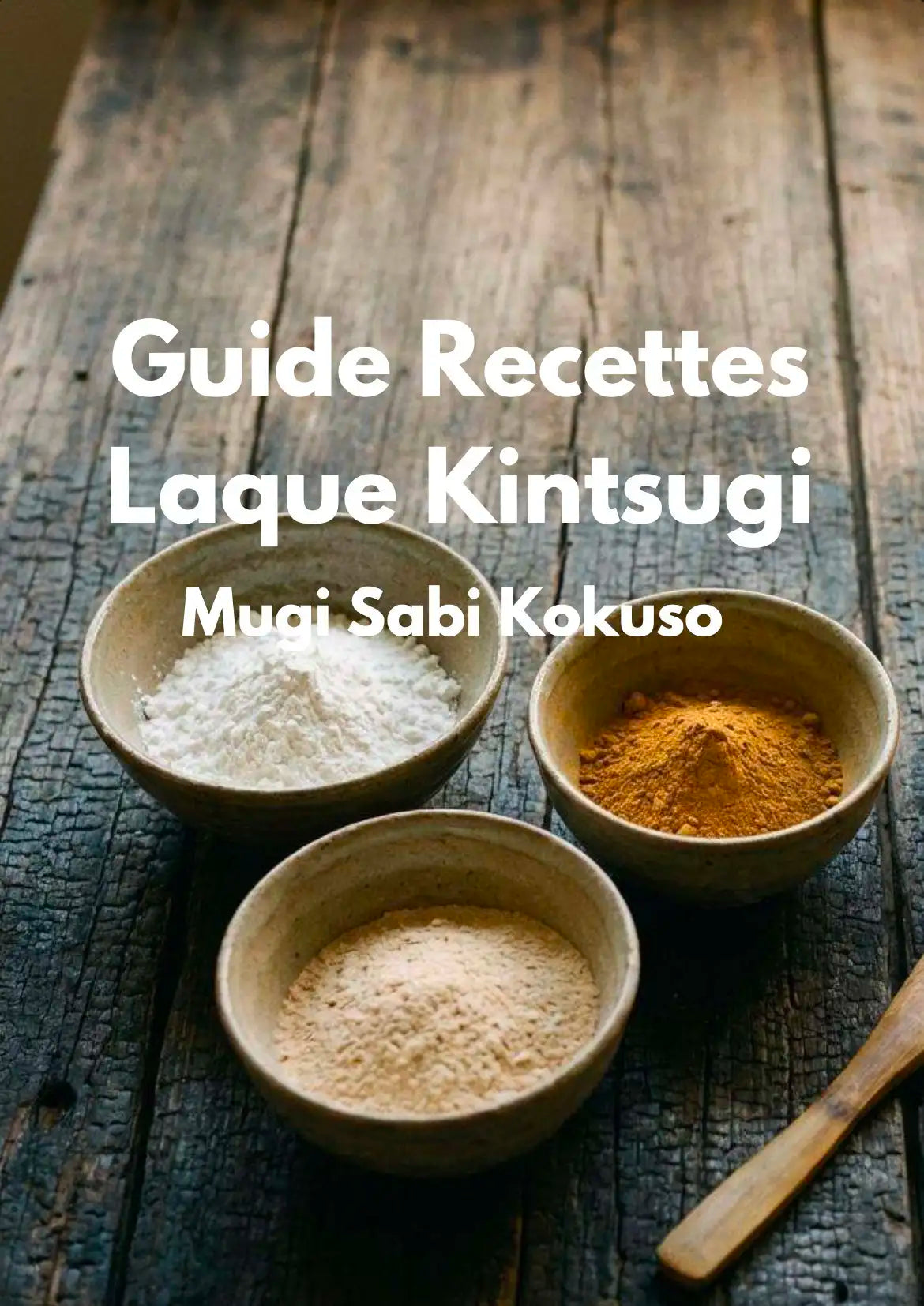
Kintsugi Lacquer Recipe Guide – Mugi Sabi Kokuso - Authentic Kintsugi
Master the three fundamental recipes of traditional kintsugi with precise measurements, plus gluten-free alternatives. Instant download after purchase.
Couldn't load pickup availability
- Paiement sécurisé
- Téléchargement immédiat
- Fichier PDF, à lire et à imprimer
Are you looking for precise and verified recipes for traditional kintsugi? This guide provides you with the three fundamental urushi lacquer preparations used in Japanese workshops. Exact measurements, gluten-free alternatives. Immediate PDF download.
How to Use This Guide
Techniques Detailed Features
Content What You Will Learn
The 3 Fundamental Recipes
The guide details the three essential preparations used in traditional Japanese kintsugi. Each recipe is presented with precise measurements in grams and ratios validated by workshop practice.
- Mugi-urushi: Traditional glue made from ki-urushi lacquer and flour (wheat or rice). Used to assemble broken ceramic fragments.
- Sabi-urushi: Filling putty made of lacquer, tonoko powder, and water. Used to fill cracks and gaps in the material.
- Kokuso-urushi: Reconstruction preparation with lacquer, tonoko, and wood sawdust. Suitable for major structural repairs.
Gluten-Free Versions
All recipes include alternatives to wheat flour. Measurements with rice flour are provided to allow people allergic or intolerant to gluten to practice kintsugi safely.
Safety Protocol
Urushi lacquer contains urushiol, an allergenic resin. The guide explains the precautions to take when handling it, the necessary protective equipment, and first aid steps in case of skin contact.
Quality Methodology
Proportion Tables
The guide includes summary tables with exact measurements for each recipe. Quantities are given in grams to facilitate ingredient weighing. Ratios are expressed as simple proportions.
Troubleshooting Section
A complete chapter addresses common problems encountered during lacquer preparation. Lacquer too liquid or too thick, grainy texture, incomplete or too rapid drying: each situation is analyzed with concrete solutions.
List of Tools and Materials
The guide provides a comprehensive list of necessary ingredients and recommended tools. Japanese and French names are indicated to facilitate purchases from specialized suppliers.
Benefits Why Choose This Guide
Highlights
- Verified Recipes: All preparations have been tested and refined in the Mikazukidō workshop since 2009. The measurements are validated by years of traditional kintsugi practice.
- Visual Teaching: The 70+ photos allow you to visualize each step and identify the correct textures. You avoid common mistakes thanks to precise visual cues.
- Inclusive Alternatives: The gluten-free versions make kintsugi accessible to people with allergies. Recipes based on rice flour have the same properties as traditional wheat versions.
For Whom
This guide is for beginners seeking clear instructions for their first repairs. It is also suitable for experienced practitioners who want to perfect their measurements or discover gluten-free alternatives. Lovers of wabi-sabi and Japanese craftsmanship will find in these recipes the authenticity of methods passed down in Japan.
Guarantee and Support
Every purchase is covered by a 30-day money-back satisfaction guarantee. If you have questions after reading the guide, you can contact the workshop by email for clarifications on the recipes.
FAQ Frequently Asked Questions
Access How do I receive the guide after purchase?
The download is immediate after your payment is confirmed. You will receive an email with the download link for the PDF file. The guide is accessible from your computer, tablet, or smartphone. You can print it as many times as needed for your personal use.
Level Do I need prior kintsugi experience?
No, the guide is designed for beginners. Each step is explained with simple terms and illustrated with photos. The proportion tables help you succeed in the preparations the first time. Experienced practitioners will find details on dosages and gluten-free variants.
Materials Where can I buy the ingredients for the recipes?
The guide includes a complete list of materials with Japanese and French names. Urushi lacquer, tonoko powder, and other ingredients are available from specialized online suppliers. Some materials, like rice flour, can be found in organic stores or Asian grocery stores.
Safety Is urushi lacquer dangerous?
Urushi lacquer contains urushiol, a resin that can cause skin allergic reactions. The guide details the complete safety protocol: wearing gloves, ventilating the workspace, actions to take if it contacts the skin. By following these precautions, you can practice kintsugi safely.
Content What is the difference between the three recipes?
Each preparation has a specific function. Mugi-urushi is a strong glue that assembles broken pieces. Sabi-urushi is a putty that fills cracks and missing material. Kokuso-urushi contains wood sawdust for major structural reconstructions. The guide explains when to use each recipe depending on the type of repair.
Version Will there be more volumes?
This guide is the first volume dedicated to basic preparations. A 15% promo code is included for the upcoming volume 2, which will cover finishing and gilding techniques. Buyers of volume 1 will receive a notification when the next guides are released.
Support Can I ask questions after purchase?
Yes, email support is included. If you encounter difficulties with a recipe or need clarification on a measurement, you can contact the Mikazukidō workshop. Responses are usually sent within 48 business hours.
Share