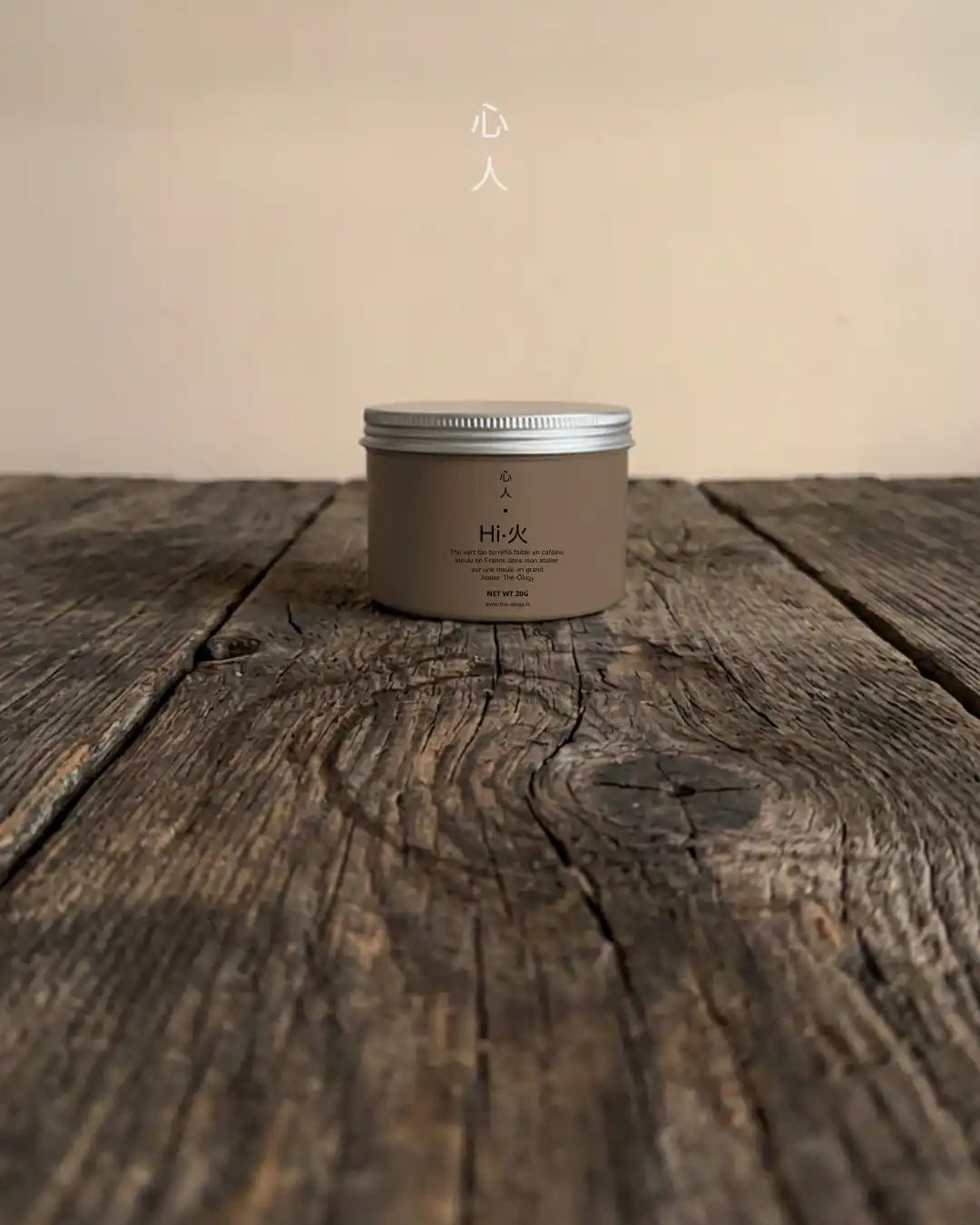
Je prépare l'ouverture de ma première maison de thé à Nice : un lieu-refuge où déguster, apprendre et choisir ses thés — et découvrir l'art du Kintsugi.
Une légère hausse de prix
Le transport chez mes fournisseurs augmente, et le thé vert connaît une hausse mondiale. Je répercute cette évolution sur une partie de mon catalogue, de façon mesurée, pour continuer à sourcer la même qualité.
Où j'en suis
Le déménagement, c'est maintenant : je m'installe à Nice le 20 août. L'atelier et la recherche du lieu pour l'espace de dégustation avancent sur place. Ouverture visée : 2026.
Investisseurs & partenaires
J'ouvre mon tour de table à des partenaires qui partagent une vision d'artisanat patient et durable. Vous voulez en être ?
Uji Houjicha – Low-Caffeine Roasted Green Tea – 100g
A Japanese green tea roasted at high temperature, developing aromas of toasted hazelnut and caramel. Its roasting reduces caffeine to 7-20 mg per cup, allowing for a relaxing evening tasting.
1 review
Vos retours nous sont précieux : laissez un avis au bas de cette page.
Regular price
€35,00 EUR
Regular priceSale price
€35,00 EUR
Sale
Sold out
Duties and taxes included.
Shipping calculated at checkout.
To add to cart, go to the product page and select a purchase option
In stock
Quantity
Couldn't load pickup availability
Paiement sécurisé
Expédié sous 48 h
Échantillons dispo
Uji Houjicha is a Japanese green tea processed by high-temperature roasting. This technique develops notes of roasted hazelnut and caramel while reducing caffeine to 7-20 mg per cup. Originating from the Uji region near Kyoto, this tea offers a comforting, woody infusion, ideal for relaxing evening moments.
Roasted hazelnutCaramelRoasted wood
TEMP90-95°CTemperature
TIME3-4 minInfusion
DOSE2-3 gPer cup
CAFFEINE7-20 mgPer cup
€174/kg | €0.88 per cup | 40 cups
Brewing Timer: 3 min 30 s
03:30
CompositionRoasted Green Tea – Uji Bancha
Uji Houjicha is made from leaves and stems of Bancha, a Japanese green tea harvested later in the season. These leaves are then roasted at high temperature in rotating drums or porcelain tanks. Roasting alters the chemical structure of the leaves and significantly reduces their caffeine content while developing characteristic roasted aromas.
Roasting Process
Houjicha roasting is done at temperatures between 150°C and 200°C for a few minutes. This step changes the leaf color from green to copper brown. The process also reduces the natural astringency of green tea and softens bitterness, creating a smooth and balanced infusion without the typical grassy notes of unroasted green teas.
Uji Origin
The Uji region, located in Kyoto Prefecture, has been cultivating tea since the 13th century. This area benefits from a temperate climate, rich soils, and ancestral agricultural techniques passed down through generations. Uji plantations produce some of Japan’s most renowned green teas, including matcha, sencha, and gyokuro.
ExpertiseSelection and Quality
Our selection of Uji Houjicha is based on three pillars. First, the certified geographic origin from the Uji region guarantees a recognized terroir. Next, the traditional roasting method preserves authentic aromas without burning the leaves. Finally, the product’s freshness ensures that volatile aromatic compounds remain intact until tasting.
Quality Criteria
Controlled roasting: Temperature and duration are precisely adjusted to achieve a uniform copper color and balanced aromas, without burnt notes.
No bitterness: A quality Houjicha is characterized by a smooth taste and a complete absence of astringency, the result of controlled roasting.
Whole leaves: The leaves and stems should be relatively intact, unbroken, ensuring a clean infusion and optimal flavor extraction.
Airtight container, protected from light and humidity
Net Weight
100 grams
TipsPreparation and Tasting
Optimal Preparation
For a 250 ml cup, use 2 to 3 grams of Houjicha. Heat the water to a temperature between 90°C and 95°C. This high temperature is necessary to fully extract the roasted aromas. Pour the water directly over the leaves and let steep for 3 to 4 minutes. Houjicha tolerates a longer infusion well without developing bitterness.
Variations and Recipes
Houjicha Latte: Prepare a concentrated infusion with 5 grams for 100 ml of water at 95°C for 2 minutes. Add 150 ml of hot milk (cow, oat, or almond) and froth. Sweeten lightly with maple syrup or honey if desired.
Iced Houjicha: Cold brew by placing 5 grams of tea in 500 ml of cold water in the refrigerator for 4 to 6 hours. This method produces a refreshing drink with delicate aromas and no bitterness.
Reinfusion: Houjicha leaves can be reinfused 2 to 3 times. Slightly increase the steeping time by 30 seconds with each successive reinfusion to maintain flavor intensity.
Food Pairings
Houjicha pairs well with chocolate pastries, caramel desserts, shortbread cookies, and dried fruit cakes. Its roasted notes also complement savory dishes like grilled foods, smoked fish, and hard cheeses.
FAQFrequently Asked Questions
CaffeineWhy does Houjicha contain so little caffeine?
High-temperature roasting breaks down a significant portion of the caffeine present in the tea leaves. The heat process transforms or evaporates certain compounds, including caffeine. Additionally, Houjicha is often made from Bancha, a tea harvested later in the season and naturally lower in caffeine than the early spring harvests. The final result contains between 7 and 20 mg per cup, which is 4 to 10 times less than a standard coffee.
PreparationCan I drink Houjicha in the evening without disturbing my sleep?
Houjicha is specifically recommended for evening consumption due to its very low caffeine content. With only 7 to 20 mg of caffeine per cup, it generally does not affect sleep, unlike traditional green teas like sencha or gyokuro, which contain 20 to 50 mg per cup. Many people in Japan drink Houjicha after dinner as a relaxing beverage without impacting their nighttime rest.
OriginWhat makes the Uji region so renowned for tea?
Uji has been cultivating tea for over 800 years and benefits from an exceptional terroir. The region has a temperate climate with frequent morning mists, mineral-rich soil, and regular rainfall. These natural conditions favor the development of high-quality tea leaves. Uji has also developed specific cultivation techniques, including shading the tea plants before harvest for certain premium teas. This historical expertise makes Uji one of the three major tea-producing regions in Japan.
TasteDoes Houjicha taste like a classic green tea?
Houjicha is radically different from traditional green teas. While green teas like sencha have vegetal, grassy, and sometimes marine notes, Houjicha offers an aromatic profile of roasted hazelnut, caramel, and toasted wood. Roasting completely removes the astringency and bitterness characteristic of green teas. The result is a smooth, round, and comforting drink that resembles a light black tea or an infusion of roasted grains.
StorageHow to store Houjicha to preserve its aromas?
Store Houjicha in an opaque airtight container, away from direct light, heat, and humidity. The roasted aromas are made up of volatile molecules that evaporate when exposed to air. A metal or ceramic container with a tight seal is ideal. Avoid storing the tea near spices or strongly scented products as the leaves easily absorb surrounding odors. Under these conditions, Houjicha retains its aromatic qualities for 6 to 12 months.
ROASTINGWhat makes Houjicha so mild?Roasted, caramel, low caffeine
Houjicha is a green tea roasted at high temperature: this roasting gives it its reddish-brown color, notes of caramel and roasted hazelnut, and its great sweetness without bitterness. Roasting also naturally reduces its caffeine content, making it a perfect tea for late in the day and evening.
UsageCan you cook with Houjicha?
Houjicha is used in many culinary preparations. In pastry, it flavors creams, chocolate ganaches, ice creams, and cake batters with its roasted notes. Infuse the tea in milk or cream to create an aromatic base. Houjicha powder can be incorporated directly into cookie doughs, brownies, or financiers. In savory cooking, a Houjicha infusion can be used as a cooking liquid for rice or as a base for sauces accompanying grilled meats and fish.
Tout ce qu'il faut savoir pour bien choisir et préparer son thé.
Comment préparer le matcha ?
Tamisez 1 à 2 g de matcha (½ à 1 cuillère bambou) dans un bol. Versez 60–70 ml d'eau à 70–80 °C, puis fouettez vivement en W avec le chasen jusqu'à obtenir une mousse fine.
Quelle température pour infuser le thé vert ?
Entre 70 et 80 °C pour préserver la douceur et éviter l'amertume. 1 à 2 minutes d'infusion suffisent ; vous pouvez réinfuser les feuilles 2 à 3 fois.
Comment conserver mon thé ?
À l'abri de l'air, de la lumière, de l'humidité et des odeurs, dans une boîte hermétique opaque. Évitez le réfrigérateur. Consommez idéalement dans les 12 mois.
Quels sont les délais et frais de livraison ?
Livraison offerte dès 49 € d'achat. Les commandes sont préparées avec soin sous 1 à 3 jours ouvrés et expédiées en France et en Europe.
Proposez-vous des échantillons ?
Oui. Pour de nombreux thés, un format échantillon (environ 10 g, soit 2–3 tasses) est proposé sur la fiche produit afin de découvrir avant de s'engager.
Qu'est-ce que le Kintsugi ?
Le Kintsugi est l'art japonais de réparer la céramique brisée à l'or, en sublimant la cassure plutôt que de la cacher. Une philosophie de la beauté imparfaite, le wabi-sabi.
Vos thés sont-ils bio ?
Une grande partie de notre sélection est issue de l'agriculture biologique certifiée. La certification est indiquée sur chaque fiche produit concernée.
Choosing a selection results in a full page refresh.
Opens in a new window.
Uji Houjicha – Low-Caffeine Roasted Green Tea – 100g€35,00