


Restored Antique Tokkuri Kintsugi – 19th Century – 30 cm
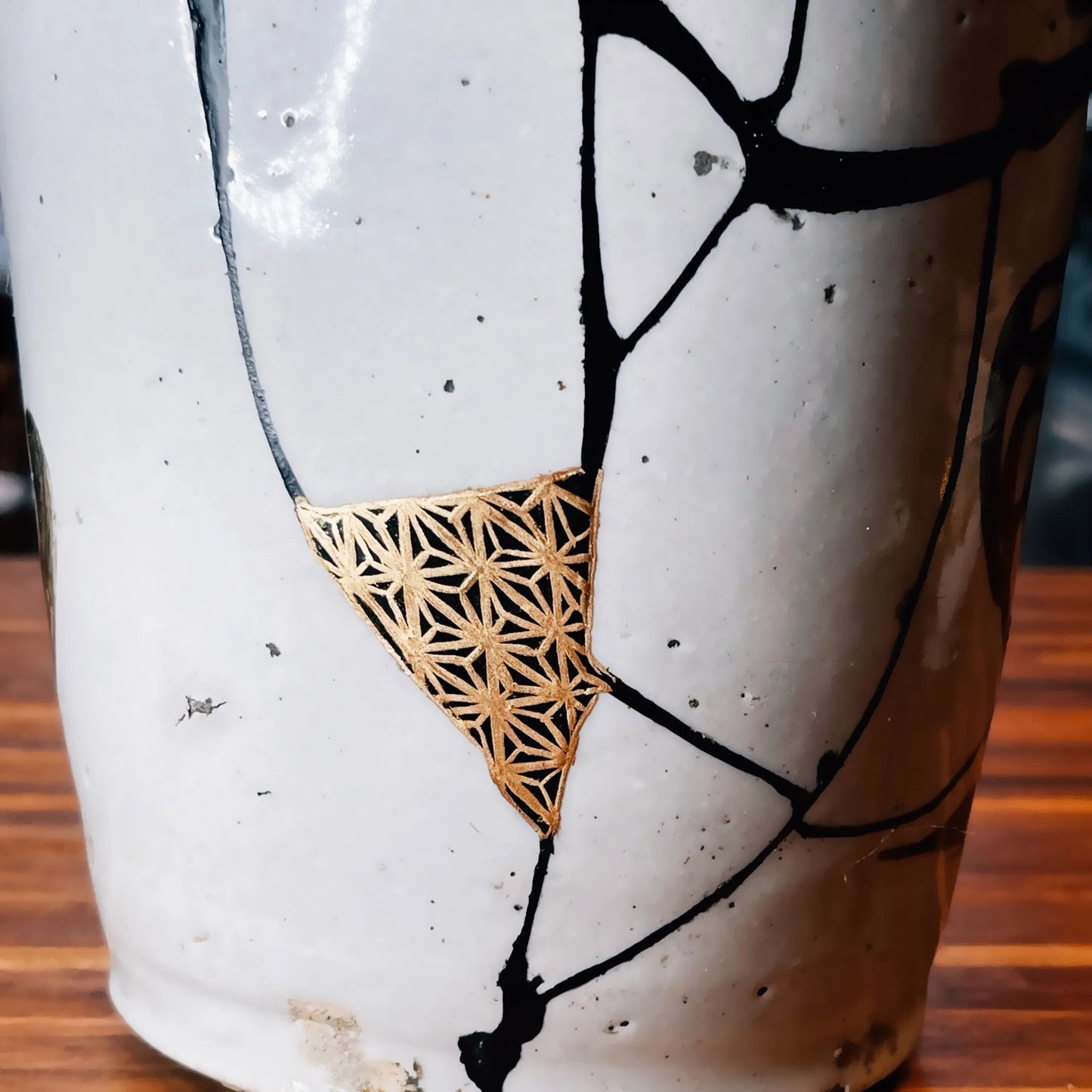
An ancestral sake bottle from the early 19th century, adorned with authentic kanji calligraphy. Exceptional glossy glazes and meticulous Kintsugi restoration carried out over six months with pure gold and Urushi lacquer. A living testament to traditional Japanese craftsmanship, elevated by the art of precious repair.
Vos retours nous sont précieux : laissez un avis au bas de cette page.
Low stock
Couldn't load pickup availability
- Paiement sécurisé
- Expédié sous 48 h
- Échantillons dispo
This authentic Japanese Tokkuri from the early 19th century embodies the excellence of traditional ceramics. Adorned with colored kanji calligraphies describing the merchant’s name and location, it features remarkable glossy glazes. Restored patiently over six months using the Kintsugi method, each golden line tells a story of rebirth and imperfect beauty.
History 19th Century Tokkuri
The Tokkuri is the traditional Japanese bottle used for serving sake. This early 19th-century piece features typical characteristics of the late Edo period. The colored kanji calligraphies identify the original merchant and their geographic location, a common commercial practice allowing the bottles to be returned and refilled.
Exceptional Glossy Glazes
The surface of this Tokkuri displays remarkably glossy glazes achieved by high-temperature firing in a traditional kiln. This vitrified finish protects the ceramic while creating characteristic luminous reflections. The intensity of the glazes reflects the technical mastery of potters from that era. The variations in hue result from the oxidizing or reducing atmosphere of the kiln during prolonged firing.
Authentic Calligraphies
The colored kanji inscriptions are a rare feature on Tokkuri from this period. These characters identify the name of the manufacturer or merchant as well as the location of the establishment. The presence of these calligraphies significantly increases the historical and documentary value of the piece. The calligraphed Tokkuri also served as advertising for sake businesses.
Restoration Traditional Kintsugi – 6 Months
This Kintsugi restoration required six months of meticulous work carried out by the Mikazukidō workshop. Each step strictly follows the traditional Japanese method using natural Urushi lacquer and 24-carat pure gold. The process demands patience and precision as the Urushi lacquer must harden gradually under controlled humidity and temperature conditions.
Urushi-Tsugi Technique
- Natural Urushi Lacquer: Resin extracted from Toxicodendron vernicifluum. Once fully hardened after several weeks, it becomes chemically inert and perfectly safe for food contact. No residual toxicity.
- Pure 24-Carat Gold: Genuine gold powder applied to the repair lines to create golden veins. The gold never tarnishes and ensures archival durability.
- Multi-Step Process: Assembly of fragments, filling of gaps, progressive sanding, application of gold, final polishing. Each layer requires several days of curing before the next.
Philosophy of Repair
Kintsugi transforms cracks into valued aesthetic elements. This Japanese philosophical approach celebrates the object's history rather than hiding its wounds. The gold lines tell the story of the piece and create a unique pattern impossible to replicate. The restoration thus increases the artistic and spiritual value of the Tokkuri by embodying the concepts of wabi-sabi and resilience.
Details Identity Card
Use Sake Service
Traditional Function
The Tokkuri was historically used to store and pour sake. Its narrow neck allowed a rope to be tied for returning the empty bottle to the merchant who would refill it. After Kintsugi restoration with fully hardened Urushi lacquer, this Tokkuri regains its food-safe usability without health risks. The pure gold and hardened lacquer are chemically inert.
Maintenance and Preservation
- Cleaning: Rinse gently with lukewarm water. Avoid harsh detergents and abrasive sponges that could damage the gold lines or Urushi lacquer.
- Drying: Dab with a soft cloth without rubbing the restored areas. Do not use a dishwasher.
- Storage: Keep at a stable temperature in a dry place away from direct sunlight. Protect from sudden thermal shocks.
Expertise Mikazukidō Workshop
The restoration of this Tokkuri was carried out by the Mikazukidō workshop following the traditional protocols of Japanese Kintsugi. This meticulous six-month work demonstrates a commitment to the authenticity of ancestral techniques. Every gesture respects the methods passed down through generations of artisans specialized in precious repair.
Quality Criteria
- Authentic Materials: Exclusive use of traditionally extracted natural Urushi lacquer and 24-carat pure gold. No synthetic substitutes like epoxy or metallic powders imitating gold.
- Traditional Technique: Application of the Urushi-Tsugi method following the fracture lines. Respect for the natural curing times of the lacquer in a humidity-controlled environment.
- Artisanal Excellence: Meticulous handwork over six months with attention to every detail. Careful finishing ensuring the archival durability of the restoration.
FAQ Frequently Asked Questions
Authenticity How to verify the age of this 19th-century Tokkuri?
Early 19th-century Tokkuri show several distinctive markers. The kanji calligraphy identifying the merchant and location is a typical commercial practice of the late Edo period. The glossy glazes obtained by prolonged firing in traditional kilns show characteristic variations impossible to reproduce with modern techniques. The overall shape, the weight of the stoneware, and slight irregularities from handmade production confirm the piece’s ancient origin.
Restoration Why did the Kintsugi restoration take six months?
The traditional Kintsugi method with natural Urushi lacquer requires uncompromisable curing times. Each layer of lacquer needs several days in a temperature- and humidity-controlled environment before applying the next. The process includes assembling the fragments, filling gaps with Urushi paste, progressive sanding, applying pure gold in several passes, and final polishing. This patience ensures a durable restoration that is perfectly safe for food contact.
Safety Is Urushi lacquer safe after hardening?
Absolutely. Natural Urushi lacquer can cause skin allergic reactions when it is fresh and wet. However, once the polymerization process is fully complete after several weeks, it becomes chemically inert and perfectly safe. The hardened lacquer has natural antibacterial properties and resists water, food acids, and moderate heat. This Tokkuri can be used for hot or cold sake without any health risk. The 24-carat pure gold used for the repair lines is also completely inert.
Usage Can this Tokkuri be used to serve sake?
This restored Tokkuri fully regains its original sake-serving function. The fully hardened Urushi lacquer and pure gold used in the restoration allow contact with food liquids without alteration or substance migration. You can store and pour cold sake or warm the bottle using the traditional method. Simply rinse with warm water after use and gently pat dry to preserve the golden lines. This piece also serves as a master decorative element showcasing historic Japanese craftsmanship.
History What is the meaning of the kanji calligraphy?
The kanji calligraphy painted on 19th-century Tokkuri identified the sake merchant’s name and geographic location. This practice served several commercial functions. Customers could return the empty bottle to the identified establishment to have it refilled. The Tokkuri’s narrow neck allowed a cord to be attached for easier transport. The inscriptions also acted as advertising for the business. The presence of colored calligraphy is a rare feature on Tokkuri from this period and significantly increases their historical and documentary value.
Value Why include insurance in the sale price?
The insurance included in the price covers transportation and guarantees the protection of this unique piece during shipping. A 19th-century Tokkuri restored with Kintsugi represents a significant cultural and artistic investment. The insurance protects against accidental damage during transport. This precaution reflects our commitment to preserving Japanese ceramic heritage and ensures peace of mind when acquiring it. The price also includes six months of meticulous traditional restoration work using authentic precious materials.
Collection How to incorporate this Tokkuri into a ceramics collection?
This 19th-century Tokkuri with Kintsugi restoration is an ideal centerpiece for any Japanese ceramics collection. Its authentic dating to the late Edo period, rare colored kanji calligraphy, and exceptional glossy glazes make it a valuable testament to traditional craftsmanship. The Kintsugi restoration adds a contemporary dimension, creating a dialogue between past and present. This piece works well as a standalone focal point or alongside other historic Japanese ceramics. It also offers educational potential by demonstrating traditional manufacturing and restoration techniques.
Share


Tout ce qu'il faut savoir pour bien choisir et préparer son thé.
Comment préparer le matcha ?
Tamisez 1 à 2 g de matcha (½ à 1 cuillère bambou) dans un bol. Versez 60–70 ml d'eau à 70–80 °C, puis fouettez vivement en W avec le chasen jusqu'à obtenir une mousse fine.
Quelle température pour infuser le thé vert ?
Entre 70 et 80 °C pour préserver la douceur et éviter l'amertume. 1 à 2 minutes d'infusion suffisent ; vous pouvez réinfuser les feuilles 2 à 3 fois.
Comment conserver mon thé ?
À l'abri de l'air, de la lumière, de l'humidité et des odeurs, dans une boîte hermétique opaque. Évitez le réfrigérateur. Consommez idéalement dans les 12 mois.
Quels sont les délais et frais de livraison ?
Livraison offerte dès 49 € d'achat. Les commandes sont préparées avec soin sous 1 à 3 jours ouvrés et expédiées en France et en Europe.
Proposez-vous des échantillons ?
Oui. Pour de nombreux thés, un format échantillon (environ 10 g, soit 2–3 tasses) est proposé sur la fiche produit afin de découvrir avant de s'engager.
Qu'est-ce que le Kintsugi ?
Le Kintsugi est l'art japonais de réparer la céramique brisée à l'or, en sublimant la cassure plutôt que de la cacher. Une philosophie de la beauté imparfaite, le wabi-sabi.
Vos thés sont-ils bio ?
Une grande partie de notre sélection est issue de l'agriculture biologique certifiée. La certification est indiquée sur chaque fiche produit concernée.