Je prépare l'ouverture de ma première maison de thé à Nice : un lieu-refuge où déguster, apprendre et choisir ses thés — et découvrir l'art du Kintsugi.
Une légère hausse de prix
Le transport chez mes fournisseurs augmente, et le thé vert connaît une hausse mondiale. Je répercute cette évolution sur une partie de mon catalogue, de façon mesurée, pour continuer à sourcer la même qualité.
Où j'en suis
Le déménagement, c'est maintenant : je m'installe à Nice le 20 août. L'atelier et la recherche du lieu pour l'espace de dégustation avancent sur place. Ouverture visée : 2026.
Investisseurs & partenaires
J'ouvre mon tour de table à des partenaires qui partagent une vision d'artisanat patient et durable. Vous voulez en être ?
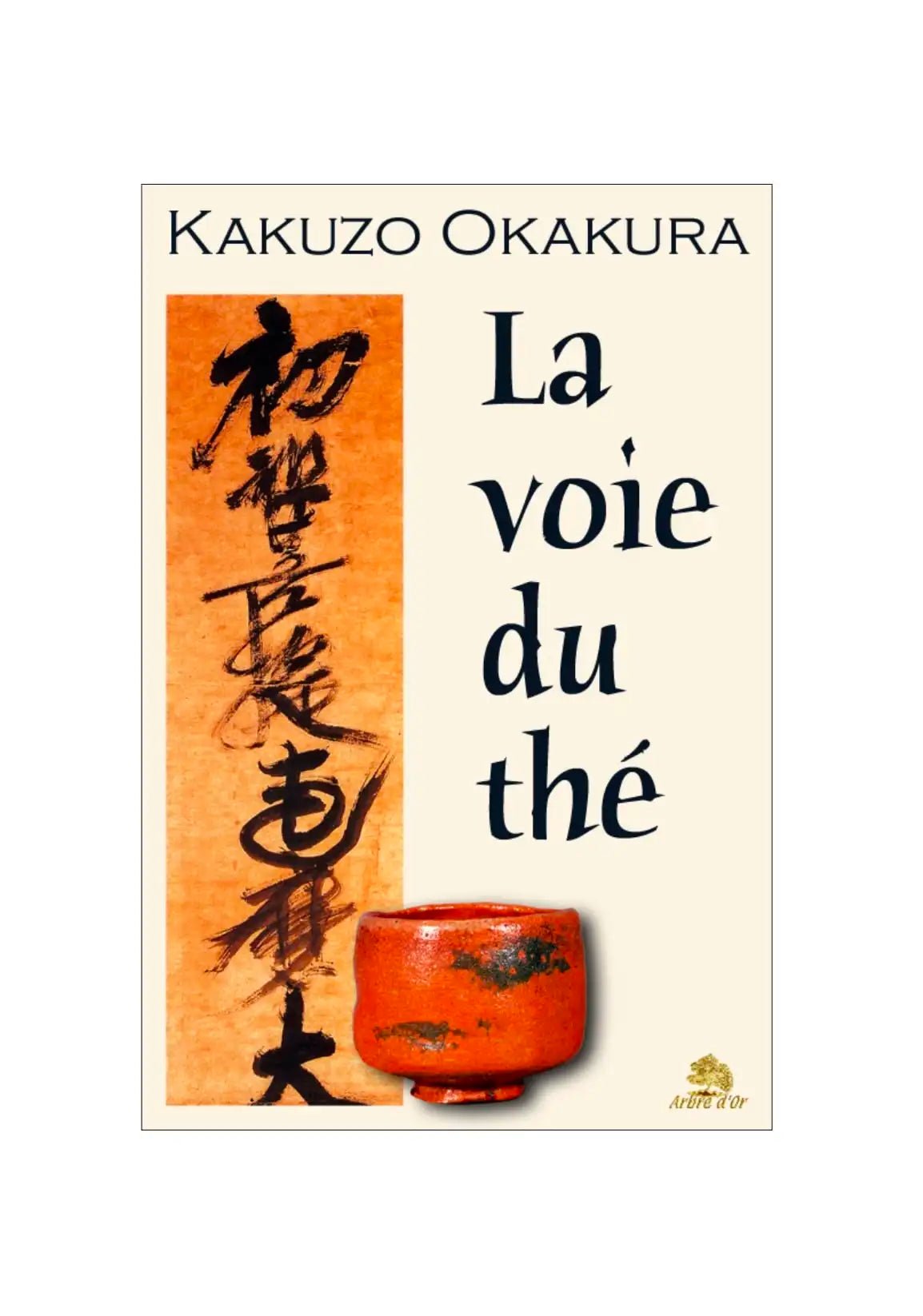
The Book of Tea – Free PDF – Kakuzo Okakura – Philosophical Essay
Dive into the essence of the Japanese tea ceremony with this timeless classic, revealing how a simple cup becomes a path to harmony, beauty and ancestral wisdom.
No reviews
Regular price
€0,00 EUR
Regular priceSale price
€0,00 EUR
Sale
Sold out
In stock
Quantity
Couldn't load pickup availability
Paiement sécurisé
Téléchargement immédiat
Fichier PDF, à lire et à imprimer
The Book of Tea by Kakuzo Okakura is a poetic journey into the heart of Japanese philosophy. Written in 1906, this essay explores the tea ceremony as an art of living where harmony, respect, purity, and tranquility meet. Offered with your order, this classic invites you to transform every cup into a moment of contemplation and serenity.
PhilosophyJapanese cultureArt of living
AUTHOROkakuraKakuzo
YEAR1906Publication
CHAPTERS7Essays
LANGUAGEFrenchTranslation
Book offered with your order | Reference edition | Public domain
EssenceThe Spirit of the Book
The Book of Tea reveals the Japanese ceremony as a cult founded on the worship of beauty in everyday facts. Kakuzo Okakura presents teaism as a philosophy uniting Taoism, Zen Buddhism, and Confucianism to create an art of living where every gesture becomes sacred.
A timeless philosophy
Published in New York in 1906, this essay was intended for Westerners to convey the authentic atmosphere of the way of tea. Okakura speaks of harmony with nature, sincere respect, purity of heart, and tranquility of mind. These four principles established by master Sen no Rikyū in the 16th century form the foundations of the Japanese ceremony.
A bridge between two worlds
Okakura uses the metaphor of tea to explain Asian thought that embraces imperfection and finds the absolute in the unfinished. He shows how change is the only eternity and how beauty lies in the simplicity of everyday life. The work remains clearly relevant for anyone seeking to slow down and rediscover the essential.
AuthorKakuzo Okakura
Okakura Kakuzō was born in 1862 in Yokohama, son of a merchant. After studying languages at the Imperial University of Tokyo, he became director of the National School of Fine Arts at 29. In 1906, he was invited to the Museum of Fine Arts in Boston where he became curator of the Japanese and Chinese art department in 1910.
Defender of Asian culture
Cultural mediator: He devoted his life to preserving Japanese heritage against Westernization while building bridges between East and West
Versatile scholar: Art historian trained by Ernest Fenollosa at Harvard, he mastered English perfectly and deeply understood both cultures
Artistic visionary: He founded the Nihon Bijutsuin with 37 artists to promote modern Japanese art without renouncing ancestral traditions
Curator Boston MuseumDirector of Tokyo School of Fine ArtsFriend of John La Farge
StructureThe Seven Chapters
Chapter 1
The Cup of Humanity - History of teaism and East-West misunderstandings
Chapter 2
The Schools of Tea - Evolution under the Tang, Song, and Ming dynasties of China
Chapter 3
Taoism and Zen - Spiritual connection between philosophies and tea practice
Chapter 4
The Tea Room - Architectural symbolism and purity of the sacred space
Chapter 5
The Appreciation of Art - Spiritual communion necessary to understand the work
Chapter 6
The Flowers - Japanese floral art and respect for each individual bloom
Chapter 7
The Tea Masters - Artistic contributions and the last ceremony of Sen no Rikyū
ValueWhy give it to yourself
A gateway to the philosophy of TEA.ŌLOGY
This book perfectly embodies the spirit of our house: tea is not just a drink, it is a ritual of beauty and awareness. Okakura shows how to transform the daily act of drinking tea into active meditation, a celebration of the present moment, and communion with nature.
A guide to slowing down
In a world of constant acceleration, The Book of Tea invites you to rediscover the natural rhythm of things. Each chapter reveals how simplicity becomes sophistication, how imperfection becomes beauty, and how a cup of tea becomes a universe of contemplation. Giving this book is sharing much more than a text: it is passing on a way of being in the world.
FAQFrequently Asked Questions
ReadingWhat is the difficulty level of the book?
The Book of Tea is easy to read despite its philosophical depth. Okakura wrote in English for an uninitiated Western audience, with a poetic and accessible style. Zen and Taoist concepts are explained through simple metaphors and concrete examples drawn from the tea ceremony. No prior knowledge of Japanese culture is necessary to appreciate this essay, which reads more like a contemplative journey than an academic treatise.
HistoryWhy did Okakura write this book in English?
In 1906, Okakura was working at the Museum of Fine Arts in Boston and mingling with the American cultural elite such as John La Farge, to whom he dedicated the book. He wanted to correct Western misunderstandings about Asian culture, often reduced to folklore. Published after Japan's victory over Russia in 1905, the book also served to affirm the value of Eastern thought in the face of Western modernization. Writing in English allowed him to reach this audience directly while preserving the spiritual essence of the way of tea.
PhilosophyWhat are the four principles of the tea ceremony?
Master Sen no Rikyū established four fundamental principles in the 16th century: harmony is the unity between host, guest, and natural rhythms. Respect represents the sincerity of the heart allowing one to humbly recognize the dignity of others. Purity consists of removing the dust of the world from one’s mind. Tranquility emerges from the constant practice of the first three principles, creating a state of inner peace where a cup of tea becomes a sacred sharing with another.
ApplicationHow can these teachings be applied daily?
According to Okakura, teaism transforms the mundane into the extraordinary. Prepare your tea with full attention rather than multitasking. Choose simple but beautiful objects to create your own mental tea room. Practice appreciating imperfection: a crack in a cup can become a source of beauty according to the wabi-sabi philosophy. Slow down your movements, observe the steam, savor the aroma. The essential thing is to cultivate conscious presence in every trivial action until it becomes meditation.
CultureWhat is the difference between teaism and the tea ceremony?
The tea ceremony refers to the formal ritual codified with precise gestures and strict etiquette. Teaism is the profound philosophy underlying this practice: it is a cult of everyday beauty, a religion of aesthetics applied to the ordinary facts of existence. Okakura shows that teaism goes beyond the simple ceremony to become a complete art of living influencing architecture, decoration, painting, and moral conduct. One can practice teaism without mastering the formal ceremony by simply adopting its principles of harmony and simplicity.
EditionWhich version of the book will I receive?
The Book of Tea has been in the public domain since 1930, the author having passed away in 1913. You receive a quality French translation that captures the essence of the original text published by Fox Duffield Company in 1906. The work remains short and dense with its seven chapters, each reading like an invitation to contemplation. Some French editions include explanatory introductions on the historical context and Okakura's biography to enrich your understanding of this fundamental work in tea literature.
Tout ce qu'il faut savoir pour bien choisir et préparer son thé.
Comment préparer le matcha ?
Tamisez 1 à 2 g de matcha (½ à 1 cuillère bambou) dans un bol. Versez 60–70 ml d'eau à 70–80 °C, puis fouettez vivement en W avec le chasen jusqu'à obtenir une mousse fine.
Quelle température pour infuser le thé vert ?
Entre 70 et 80 °C pour préserver la douceur et éviter l'amertume. 1 à 2 minutes d'infusion suffisent ; vous pouvez réinfuser les feuilles 2 à 3 fois.
Comment conserver mon thé ?
À l'abri de l'air, de la lumière, de l'humidité et des odeurs, dans une boîte hermétique opaque. Évitez le réfrigérateur. Consommez idéalement dans les 12 mois.
Quels sont les délais et frais de livraison ?
Livraison offerte dès 49 € d'achat. Les commandes sont préparées avec soin sous 1 à 3 jours ouvrés et expédiées en France et en Europe.
Proposez-vous des échantillons ?
Oui. Pour de nombreux thés, un format échantillon (environ 10 g, soit 2–3 tasses) est proposé sur la fiche produit afin de découvrir avant de s'engager.
Qu'est-ce que le Kintsugi ?
Le Kintsugi est l'art japonais de réparer la céramique brisée à l'or, en sublimant la cassure plutôt que de la cacher. Une philosophie de la beauté imparfaite, le wabi-sabi.
Vos thés sont-ils bio ?
Une grande partie de ma sélection est issue de l'agriculture biologique certifiée. La certification est indiquée sur chaque fiche produit concernée.
Choosing a selection results in a full page refresh.
Opens in a new window.
The Book of Tea – Free PDF – Kakuzo Okakura – Philosophical Essay€0,00