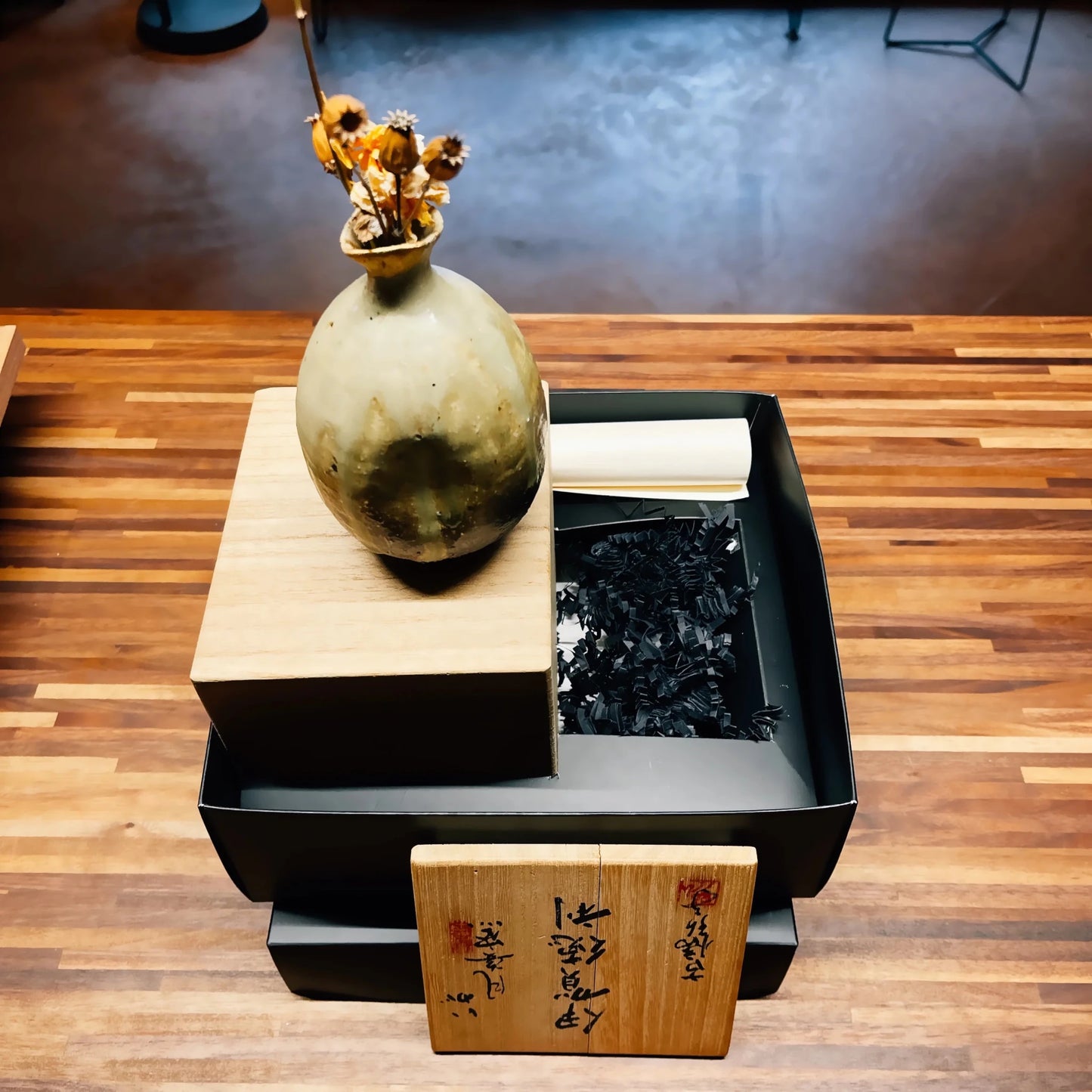
Restored Antique Tokkuri Kintsugi – 24K Gold Reconstruction
An exceptional antique sake pot restored over four months, with complete reconstruction of a missing part. Traditional Kintsugi technique using Urushi lacquer and pure gold. Tomobako box signed by the original potter, guaranteeing authenticity and historical provenance.
Low stock
Couldn't load pickup availability
- Paiement sécurisé
- Expédié sous 48 h
This exceptional ancient Tokkuri embodies the art of complex restoration. Broken into several fragments with a significant missing part, it required four months of meticulous work including the complete reconstruction of the missing section. Each golden line and the newly sculpted part tell a story of rebirth and artisanal craftsmanship.
History Ancient Japanese Tokkuri
The Tokkuri is the traditional Japanese bottle for serving sake. These pieces were made from stoneware or porcelain with a characteristic narrow neck allowing a cord to be tied for transport. Ancient Tokkuri show variations in shape and glaze depending on the production region and period.
Signed Tomobako Box
This Tokkuri comes with its original paulownia wood Tomobako box. This box serves as the traditional Japanese certificate of authenticity. It bears the handwritten signature of the artisan potter who created the piece, attesting to its origin and history. The Tomobako system represents a unique authentication method in Japanese ceramic culture, recognized by museums and international collectors.
Heritage Value
The presence of the signed Tomobako greatly increases the historical and market value of the piece. Collectors consider the box an inseparable element of the ceramic it protects. Pieces accompanied by a Tomobako can be worth twice as much compared to identical pieces without certification. This documentation guarantees traceability and preserves the object's history through generations.
Restoration Kintsugi with Reconstruction – 4 Months
This exceptional restoration required four months of meticulous work. The broken fragments were assembled while a significant missing part was entirely reconstructed. This reconstruction uses a molding and sculpting technique to recreate the original shape before applying Urushi lacquer and pure gold. The result celebrates both the fractures and the new creation.
Reconstruction Technique
- Sculpting the missing part: The absent section was recreated using a mixture of epoxy resin and ceramic powder to match the original weight and texture. Several trials were necessary to achieve the exact shape.
- Natural Urushi lacquer: Once the structural reconstruction was complete, several layers of Urushi lacquer were applied. Each layer requires several days of curing in a humidity-controlled environment before the next.
- 24-carat pure gold: Genuine gold powder was applied to all repair lines as well as the reconstructed part, creating a visual continuity between old and new.
Reconstruction philosophy
This approach goes beyond traditional Kintsugi by accepting not only cracks but also absence. Rather than seeing the missing part as a definitive loss, the reconstruction transforms it into a creative opportunity. The gold lines reveal the entire history of the object, including its destruction and complete rebirth. This piece becomes unique because the manual reconstruction ensures no other can be identical.
Details Identity card
Use Sake service
Traditional function
After complete restoration with fully hardened Urushi lacquer, this Tokkuri regains its usability for serving sake. The hardened lacquer and pure gold are chemically inert and non-toxic. The reconstructed part offers the same structural strength as the original. The traditional narrow neck allows precise pouring of sake.
Maintenance and preservation
- Cleaning: Rinse gently with lukewarm water after use. Avoid harsh detergents and abrasive sponges that could damage the gold lines or Urushi lacquer.
- Drying: Dab with a soft cloth without rubbing the restored areas. Do not use a dishwasher.
- Storage: Keep in the Tomobako box at a stable temperature in a dry place away from direct sunlight. Protect from sudden thermal shocks.
Expertise THÉ-ŌLOGY Restoration
The restoration of this Tokkuri represents a major technical challenge carried out in our workshop over four months. Reconstructing a significant missing part requires not only mastery of traditional Kintsugi but also skills in sculpting and molding. Every gesture respects the spirit of the original piece while creating a harmonious new section.
Quality criteria
- Authentic materials: Exclusive use of natural Urushi lacquer and 24-carat pure gold for all visible surfaces. The reconstruction structure employs modern safe materials while respecting traditional aesthetics.
- Mixed technique: Combination of traditional Kintsugi methods and contemporary ceramic reconstruction techniques. This approach ensures structural strength while preserving aesthetic authenticity.
- Artisanal excellence: Meticulous manual work over four months with attention to every detail. Sculpting the missing part required several attempts to achieve the exact shape matching the original.
FAQ Frequently Asked Questions
Technique How is a missing part reconstructed in Kintsugi?
The reconstruction of a missing part uses a molding and sculpting technique. A temporary shape is created in clay or wax to define the missing geometry. This shape serves as a mold to cast a mixture of epoxy resin and ceramic powder that matches the weight and texture of the original. Once hardened, this new section is integrated into the piece with Urushi lacquer. Several layers of lacquer are applied with drying times between each. Finally, pure gold is applied over the entire reconstruction creating a visual continuity. This method differs from traditional Kintsugi, which only assembles existing fragments.
Authenticity Does the Tomobako guarantee the authenticity of the piece?
The Tomobako is the traditional Japanese certificate of authenticity for ceramics. Made from paulownia wood, it bears the handwritten signature of the potter who created the original piece. This signature usually includes the artisan’s name, the title of the work, and sometimes the creation date. The Tomobako system is recognized by museums and international collectors as a reliable authentication method. However, it is important to verify that the calligraphy matches the artisan’s style and that the wood of the box shows aging consistent with the piece’s presumed age. The presence of a signed Tomobako significantly increases the ceramic’s value.
Durability Is the reconstructed part as strong as the original?
The reconstruction uses modern materials like epoxy resin mixed with ceramic powder, offering structural strength comparable to or even greater than the original ceramic. Once covered with multiple layers of hardened Urushi lacquer, the new section becomes perfectly integrated and durable. Urushi lacquer has natural antibacterial properties and resists water, food acids, and moderate heat. However, like any restored antique ceramic, the piece should be handled carefully to avoid shocks. The pure gold used for finishing never tarnishes and guarantees permanent archival durability of the aesthetic appearance.
Usage Can this Tokkuri be used to serve sake?
This restored Tokkuri fully regains its original function of serving sake. The Urushi lacquer, completely hardened after several weeks, becomes chemically inert and perfectly safe for food contact. The 24-carat pure gold used for the repair lines is non-toxic. The structural reconstruction materials are covered with lacquer, preventing any direct contact with the liquid. You can store and pour cold sake or warm the bottle using the traditional method. Simply rinse with warm water after use and dry by gently patting. This piece also serves as a decorative element showcasing the complex restoration craftsmanship.
Value Why does reconstruction increase complexity?
Reconstructing a missing part represents the highest level of ceramic restoration. Unlike traditional Kintsugi, which assembles existing fragments, recreating an absent section requires skills in sculpting, molding, and aesthetic integration. The artisan must understand the original shape of the piece to coherently reconstruct the missing geometry. This approach takes more time because each layer of construction and lacquer must fully cure before the next. The result celebrates not only visible fractures but also absence transformed into presence. Collectors particularly appreciate these pieces as they demonstrate technical mastery while creating a dialogue between destruction, absence, and complete rebirth.
Restoration Why did this restoration take four months?
The four-month duration is explained by the technical complexity and the unavoidable curing times. Reconstructing the missing part requires several trials to achieve the exact shape. Once the structure is created, each layer of Urushi lacquer requires several days of curing in a controlled humidity and temperature environment before applying the next. The process includes cleaning the fragments, initial assembly, sculpting the reconstruction, applying multiple layers of lacquer, progressive sanding between each, applying pure gold in several passes, and final polishing. This patience ensures a durable restoration where the lacquer becomes completely inert and perfectly safe for food contact. Rushing the process would compromise the final quality.
Collection What is the value of a restored Tokkuri with reconstruction?
An ancient Tokkuri with restoration including partial reconstruction has a unique value combining historical heritage and contemporary artistic intervention. The presence of the signed Tomobako guarantees the authenticity of the original piece and significantly increases its value. The complex reconstruction demonstrates a rare level of craftsmanship mastery as few restorers have the skills necessary to harmoniously recreate missing parts. Collectors consider these pieces as living testimonies of the Japanese philosophy embracing impermanence and transformation. The price includes the meticulous four-month artisanal work, authentic precious materials, and insurance for transport. This piece functions as an art object, a functional element, and an educational support illustrating advanced ceramic restoration techniques.
Share