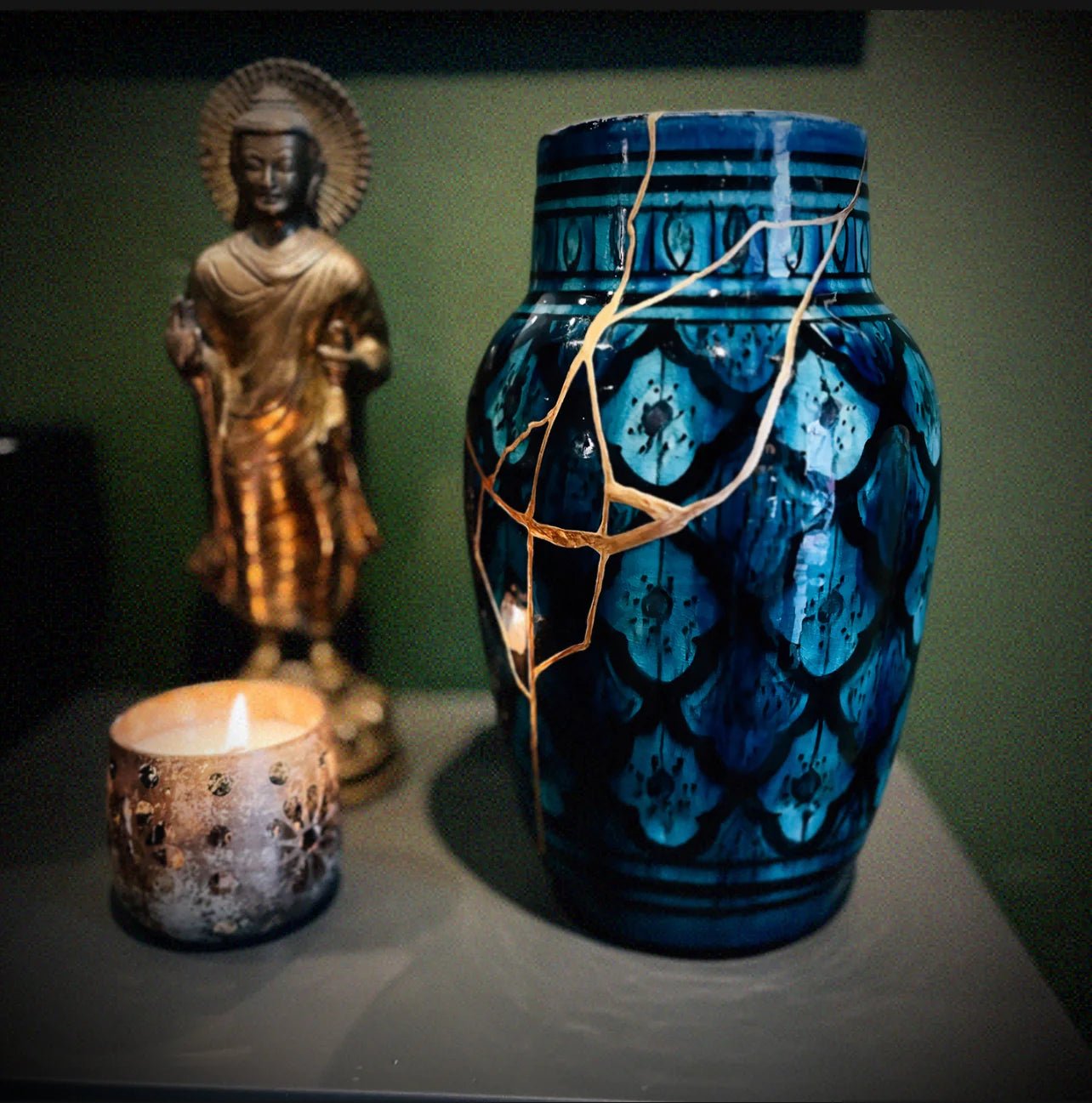
Restored Antique Moroccan Vase Kintsugi – 24K Gold – 25 cm
An antique vase from Morocco celebrating the meeting of Mediterranean craftsmanship and Japanese philosophy. Traditional ceramic elevated by handcrafted restoration with Urushi lacquer and pure gold. A spectacular decorative piece embodying the beauty of imperfection and transcontinental cultural rebirth.
Low stock
Couldn't load pickup availability
- Paiement sécurisé
- Expédié sous 48 h
This ancient Moroccan vase embodies the exceptional meeting of Mediterranean craftsmanship and Japanese philosophy. Its traditional ceramics showcase the centuries-old Moroccan expertise passed down through generations. The restoration with Urushi lacquer and pure gold celebrates its history through golden lines that transform each crack into a valued aesthetic element.
History Traditional Moroccan Ceramics
Moroccan ceramics have a millennia-old history shaped by Berber, Arab, Andalusian, and Roman influences. This cultural fusion has produced an art rich in techniques and symbolism. Moroccan artisans uphold centuries-old traditions passed down within families for generations. Morocco has three main ceramic production centers recognized worldwide.
Historical Production Centers
Fès is known for its blue floral and geometric patterns on white with Andalusian influence. Safi is the largest production center with its multicolored painted ceramics blending Amazigh symbols and floral motifs. Meknes produces pieces combining sobriety and elaborate decoration. Tamegroute makes ceramics with a unique green glaze achieved through ancestral firing techniques. Each region reflects a different relationship with the earth and expresses its identity through clay.
Traditional Techniques and Patterns
Moroccan potters shape clay on a foot-powered wheel or by hand modeling using methods passed down for centuries. The pieces dry in the sun for several days before a first firing in traditional wood-fired kilns. Amazigh geometric patterns include the diamond symbolizing fertility, the zigzag representing vital water in arid climates, and the cross evoking the balance of elements. The colors come from natural sources like saffron creating golden yellows, indigo producing deep blues, and henna giving rich oranges.
Restoration Kintsugi Transcultural Pure Gold
This restoration celebrates the meeting of two millennia-old artisanal traditions. The Japanese technique honors the history of this Moroccan ceramic by transforming its fractures into golden lines. This transcultural approach demonstrates that the wabi-sabi philosophy and the art of finding beauty in imperfection universally apply to any object bearing history, regardless of its geographical origin.
Traditional Urushi-Tsugi technique
- Natural Urushi lacquer: This resin extracted from the Toxicodendron vernicifluum tree is meticulously applied along the fracture lines. Each layer requires several days of curing in a controlled humidity and temperature environment before the next.
- Pure 24-carat gold: Genuine gold powder is applied to the still slightly sticky lacquer. The gold never tarnishes and guarantees a permanent archival finish, revealing the repair lines as a valued aesthetic element.
- Guaranteed safety: Once fully hardened after several weeks, Urushi lacquer becomes chemically inert and perfectly safe. The vase can be used to hold water for floral arrangements without risk.
Philosophy of transcultural restoration
Applying Kintsugi to Moroccan ceramics creates a dialogue between two distinct cultural heritages. This encounter celebrates the universal values of acceptance of impermanence and recognition of beauty in the lived history of an object. The golden lines tell not only the fractures endured but also the transcontinental rebirth of the piece. This approach transforms the vase into a symbol of cultural resilience and mutual enrichment between artisanal traditions.
Details Identity Card
Decoration Interior Highlight
Placement and staging
This 25 cm tall vase is a spectacular centerpiece for any interior space. Its presence asserts a sophisticated aesthetic celebrating traditional craftsmanship and the philosophy of valued imperfection. The golden lines capture and reflect natural light, creating a changing visual effect depending on the time of day. Place it on a sleek piece of furniture or a shelf where it can be admired from different angles, revealing the complexity of the repair patterns.
Floral Arrangements
- Dried Flowers: Arrangements of dried flowers like lavender, everlasting flowers, or pampas grass perfectly complement the wabi-sabi aesthetic of the vase. These long-lasting compositions require no water and protect the ceramic.
- Natural Branches: Branches of eucalyptus, twisted willow, or cherry create minimalist compositions inspired by Japanese ikebana. The simplicity of the branches highlights the golden lines of the restoration.
- Use with Water: Once the lacquer is fully cured, the vase can hold water for fresh flowers. Change the water regularly and gently dry the inside after each use to preserve the ceramic.
Know-How THÉ-ŌLOGY Restoration
The restoration of this Moroccan vase represents our commitment to cross-cultural artisanal excellence. We apply the traditional Japanese technique with the same respect and rigor as for historic Japanese ceramics. This universal approach celebrates the heritage value of any object bearing history regardless of its geographical origin. Each restoration becomes a unique creation where two millennia-old traditions meet.
Quality Criteria
- Authentic Materials: Exclusive use of natural Urushi lacquer traditionally extracted in Japan and 24-carat pure gold. No synthetic substitutes like epoxy or metallic powders imitating gold are used in our visible restorations.
- Traditional Technique: Rigorous application of the Urushi-Tsugi method precisely following the break lines. Respecting the natural curing times that are essential to guarantee the final chemical stability of the lacquer.
- Cross-cultural Excellence: Sensitivity to the specificities of each ceramic tradition. Adapting gestures and work rhythm according to the characteristics of the clay and glaze to achieve a harmonious integration of the restoration.
FAQ Frequently Asked Questions
Technique Can Kintsugi be applied to non-Japanese ceramics?
The Kintsugi technique is universally applicable to any broken ceramic regardless of its geographical origin. Urushi lacquer adheres effectively to porcelain, stoneware, earthenware, and terracotta from all global pottery traditions. The principles of repair with natural lacquer and pure gold work identically on Moroccan, European, or Asian ceramics. What may differ is the porosity of the clay depending on local firing techniques, sometimes requiring the prior application of a sealer to prevent excessive lacquer penetration into the ceramic body. This cross-cultural approach celebrates the universal value of imperfection accepted and transformed into beauty. Each restored ceramic becomes a dialogue between its original heritage and the Japanese wabi-sabi philosophy.
History What are the characteristics of Moroccan ceramics?
Moroccan ceramics are distinguished by several characteristics resulting from millennia-old traditions. The local clay comes from regional quarries and features colors ranging from red to beige depending on the deposits. Shaping techniques include foot wheel throwing and hand modeling passed down through generations. Amazigh geometric patterns carry deep symbolism, such as the diamond representing fertility, the zigzag evoking vital water, and the cross symbolizing elemental balance. The colors come from natural sources with indigo blues characteristic of Fès, unique greens from Tamegroute, and multicolored palettes from Safi. Mineral-based glazes are applied before the second firing in traditional wood-fired kilns that can reach 900 degrees for six hours.
Use Can this restored vase hold water?
Once the Urushi lacquer is fully hardened after several weeks, the restored vase becomes completely watertight and can hold water for floral arrangements. The hardened lacquer forms a chemically inert waterproof barrier that does not dissolve upon contact with water. The 24-carat pure gold used for the repair lines is completely inert and does not react with moisture. To preserve the ceramic long-term, change the water regularly to avoid mineral deposits and gently dry the inside with a soft cloth after each use. Do not fill the vase to the brim to prevent water from stagnating on the restored areas. Dried flowers are a water-free alternative that further protects the piece while creating harmonious, lasting compositions in line with the wabi-sabi aesthetic.
Decoration How to incorporate this vase into interior decoration?
This 25 cm vase is a centerpiece asserting a sophisticated aesthetic in any interior space. Its cross-cultural character allows it to blend harmoniously into various atmospheres, ranging from Mediterranean style to Japanese minimalism. Place it on an entry console as a striking first impression or on a bookshelf to create a visual focal point. In a living room, it beautifully interacts with natural textiles like linen or wool. The golden lines catch natural light, creating changing reflections throughout the day, so place it near a window without prolonged direct sunlight exposure. Pair it with simple objects to avoid visual overload so the restoration details can be fully appreciated. An arrangement of dried eucalyptus branches enhances the natural and timeless aesthetic of the piece.
Value Why invest in a Moroccan ceramic restored with Kintsugi?
A Moroccan ceramic restored using the Japanese technique represents a unique heritage and artistic investment. This piece embodies the exceptional meeting of two millennia-old artisanal traditions, creating an object impossible to reproduce identically. Each golden line tells a different story, turning the restoration into a creative act rather than a simple repair. The 24-carat pure gold never tarnishes, ensuring permanent archival value. This cross-cultural approach celebrates universal values of acceptance of imperfection and resilience in the face of destruction. Collectors particularly appreciate these pieces as they testify to an enriching intercultural dialogue where each tradition maintains its authenticity while opening up to a complementary philosophy. Included insurance protects your investment during transport and the first years. This vase functions as a decorative art object, a support for floral arrangements, and a testament to transcontinental artisanal excellence.
Philosophy What does a transcultural restoration mean?
A transcultural restoration applies the traditional Japanese technique to ceramics from a different geographical origin, creating a dialogue between distinct heritages. This approach goes beyond simple technical repair to become a philosophical act celebrating universal values shared by different cultures. The Japanese wabi-sabi, valuing imperfection and impermanence, resonates with Moroccan artisanal traditions that accept the natural variations of clay and glazes. Restoration becomes a symbol of cultural resilience where each tradition maintains its identity while mutually enriching each other. The gold lines tell not only the story of fractures but also the transcontinental rebirth of the object. This respectful fusion demonstrates that beauty and philosophy transcend geographical borders. Each restored piece becomes unique, bearing witness to a moment of encounter between two millennia-old crafts, preserving their respective authenticity while creating something new and meaningful.
Care How to care for a restored Moroccan Kintsugi vase?
Maintaining a restored vase requires simple and delicate actions that preserve both the traditional ceramic and the gold restoration. Regularly dust with a soft microfiber cloth without rubbing vigorously on the gold lines, which remain stable but can be scratched by abrasive materials. If the vase contains water for fresh flowers, change it every two to three days to avoid mineral deposits and gently dry the inside after each use. Avoid prolonged exposure to direct sunlight, which could alter the natural pigments of Moroccan ceramics over time. Never place the vase near heat sources such as radiators or fireplaces that can cause thermal shocks. Always handle the piece with both hands, holding it by the body rather than the neck or handles if present. Store it in an environment with stable temperature and humidity, avoiding sudden changes that affect old ceramics.
Share